







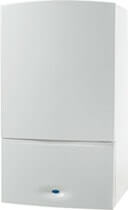

Heatline Boiler Repairs London
Over 20+ years experience with Heatline Boilers
Insurance approved
90% repaired on the same day
0203 695 3137
How we can assist with your Heatline Boilers
- Emergency Boiler Repairs
- Boiler Service
- Landlord Safety Certificates
- New Boilers Installations
- Leaking & Noisy Boilers
- Power Flushes
Boiler Repairs R Us are experienced in handling all types of Heatline Boilers. We can also assist with all gas, condensing, combi boiler installations and upgrades. All our plumbers are Gas Safe Registered so you can be assured all our work is carried out within the required regulations. So for complete customer satisfaction call us on 0203 695 3137 to get your Heatline Boilers repaired today!
Join 1,000’s of happy customers in London!
Trusted, reliable boilers repair & install specialists.
Get pricing and book repairHeatline Boilers and Boiler Repairs R Us
Heatline Boiler Repair Help Centre
Common Heatline faults, fault codes, safe checks, and when to call a Gas Safe engineer in London.
⚠️ Safety First
Smell gas? Do not touch anything. Do not use switches. Open windows, leave the property, and call the National Gas Emergency Line: 0800 111 999.
Carbon monoxide alarm sounding? Get everyone out immediately and call 999. Learn more about carbon monoxide safety.
No gas smell, no alarm? Your boiler may have locked out as a safety precaution. Try the quick checks below.
Jump to:
Fault Codes ·
Ignition / No Flame ·
Pressure ·
Circulation ·
Frozen Condensate ·
Repair or Replace
Quick Checks Before You Call Anyone
These take 60 seconds and solve a surprising number of lockouts:
- Check the pressure: If the gauge is below ~1 bar (when cold), you’ll usually need to top up. More detail in our complete pressure guide.
- Take a photo of the display: Heatline boilers show different code styles depending on model. A quick photo helps us diagnose faster.
- Check power: Boilers need electricity. Check the fused spur near the boiler and your consumer unit for any tripped breakers.
- Check thermostat/timer: Incorrect schedules, dead batteries, or clock changes can stop heating calls.
- If it’s freezing outside: A frozen condensate pipe can stop modern condensing boilers (see winter section).
- Reset once only: Reset once, wait 60 seconds. If it locks out again, stop and call an engineer.
Heatline Boilers in London
Heatline boilers are commonly found across London flats and houses, particularly in rental properties and earlier replacement installs. There are several Heatline ranges in circulation (including newer models such as Capriz 2 and older ranges like CaprizPlus, Vizo, and various Compact models). Because the installed base spans multiple generations, the fault code format and typical failure points can vary.
Good news: Many Heatline issues are straightforward for a competent Gas Safe engineer to diagnose (ignition components, sensors, diverter valves, circulation/flow problems, pressure loss). When you call, tell us the model (if known) and what the display shows (or send a photo).
Heatline Boiler Fault Codes
Important: Heatline uses different code styles across different ranges. Some show letter/number fault codes on the display, others use symbols or sequences. If you’re unsure, take a photo of the screen and share the model name (often printed on the case or inside the front panel).
| What You See | What It Usually Means | Safe First Steps |
|---|---|---|
| Ignition / no flame (boiler won’t light) |
No flame detected, gas/air issue, ignition component fault, or condensate problem in winter | Check if other gas appliances work. If freezing, check condensate pipe. Reset once only. If it returns, call an engineer. |
| Low pressure (pressure warning / lockout) |
System pressure below the safe operating minimum | Top up via filling loop to ~1.0–1.5 bar (cold). If it drops again, there’s likely a leak or vessel/PRV issue. |
| Overheat (cuts out / hot then stops) |
Restricted circulation, pump/flow problem, sludge, limescale, or a control/sensor issue | Let it cool. Check pressure. Don’t keep resetting. If repeated, book diagnosis. |
| Fan / flue safety (flue/air warning) |
Boiler cannot prove safe combustion air or flue operation | Do not repeatedly reset. Call an engineer (this is a safety system). |
| Circulation / flow fault (poor heating, noisy, stops) |
Flow through the system is too low (pump, blockage, sludge, closed valves, air locks) | Check pressure and radiator valves. If persistent, book an engineer (may need cleaning/power flush). |
| Sensor / thermistor (temperature reading fault) |
A temperature sensor is reading incorrectly or has failed | Engineer visit required. Usually a replaceable part. |
Ignition / No Flame (Boiler Won’t Light)
What is happening: The boiler attempts to ignite but cannot establish or keep a stable flame.
Common causes: Gas supply interruption, condensate drainage issue (especially in winter), ignition electrode/lead wear, flame sensing issue, flue/air proving fault, or gas valve/control problems.
What to try: Check whether your gas hob/cooker works. If it’s below freezing, check the condensate pipe section below. Reset once only. If it fails again, stop and call an engineer.
Low Water Pressure
What is happening: The sealed heating system pressure has dropped below the minimum operating level.
Common causes: Small leak in pipework/radiators, recently bled radiators, discharge from the pressure relief valve, or the expansion vessel needs attention.
What to try: Top up using the filling loop (see below). If pressure drops again within days, book a diagnosis. Use our step-by-step pressure guide.
How to Top Up Pressure (Heatline)
If you are not comfortable using the filling loop, stop and call a Gas Safe engineer.
Note: Most Heatline boilers use an external filling loop (a braided silver hose underneath/near the boiler). Some models use an integrated filling device.
- Locate the filling loop (often beneath the boiler).
- Ensure the boiler is off and cool.
- Open the valve(s) slowly.
- Watch the gauge rise to around 1.0 to 1.5 bar (when cold).
- Close valve(s) fully.
- Restart the boiler and reset if required.
Do not exceed 2.0 bar. If you overfill, stop and call an engineer.
If you need to top up frequently (more than once a month), there is likely a leak or vessel/PRV issue. Call us for a diagnosis.
Circulation / Flow Problems (Noisy, Overheating, Cold Radiators)
What is happening: The boiler detects poor water flow through the heat exchanger or system, which can cause overheating, kettling noises, and intermittent heating.
Common causes: Pump issues, sludge/magnetite buildup, limescale restriction (hard water), stuck/closed valves, or air locks.
What to do: Check pressure is healthy first. If radiators have cold spots or the boiler repeatedly trips, book an engineer. Where sludge is the root cause, a power flush may be recommended after diagnosis.
Frozen Condensate Pipe (Winter)
In freezing weather, a frozen condensate pipe can stop many condensing boilers from starting. This is often safe to resolve yourself if accessible.
Signs: Boiler won’t ignite during freezing weather, may show a lockout, gurgling sounds as it tries to start.
What to do:
- Locate the condensate pipe (white/grey plastic pipe running to a drain, sometimes outdoors).
- Pour warm water (not boiling) over the frozen section.
- Reset the boiler once thawed.
Do not use a naked flame or heat gun on plastic pipework.
Full instructions: Frozen condensate pipe guide.
If it keeps happening, we can reroute the pipe internally or add insulation to reduce repeat winter lockouts.
Why These Faults Are Common in London Homes
London’s housing mix (older pipework, flats with long pipe runs, and hard water) makes a few issues more likely:
- Low pressure: Older pipework and weeps at radiator valves can cause gradual pressure loss.
- Circulation/overheat issues: Sludge (magnetite) and limescale restrict flow, especially in systems that haven’t been cleaned/treated.
- Winter lockouts: External condensate runs can freeze during cold snaps.
Heatline Boiler Models We Repair
We repair a wide range of Heatline gas boilers, including many commonly seen in London such as:
- Capriz 2: Common newer combi range
- Capriz / CaprizPlus: Older generation combis still widely installed
- Vizo / Vizo Plus: Common London flat installs
- Compact / S24 Compact / S30S Compact: Various combi and system variants
- Monza / Solaris / Sargon: Older ranges still in service in many homes
Tip: If you’re unsure which model you have, check the front case label or the data plate inside the front panel.
Parts and Repair Practicalities
Because Heatline spans multiple generations, parts availability depends on the exact model. Many service parts (sensors, ignition components, diverter-related parts) are usually sourceable, while some older-range electronics can be slower or more expensive. We’ll tell you upfront if sourcing or cost makes replacement the smarter call.
Common Heatline Boiler Problems We See
Ignition / no-flame lockouts: Often ignition components, sensing, or condensate issues in winter.
Low pressure: Usually a system leak, PRV discharge, or expansion vessel issue rather than “the boiler” itself.
Diverter valve problems: Hot water works but heating doesn’t (or vice versa), common as boilers age.
Circulation faults: Sludge, pump wear, or restricted flow; may require cleaning and inhibitor protection.
PCB/control issues: Random resets, odd display behaviour, or repeated lockouts that need structured diagnosis.
Repair or Replace?
Many Heatline repairs are cost-effective when the boiler is otherwise sound. The key question is age + condition + the cost/availability of the failed part.
Repair usually makes sense when:
- It’s a straightforward fix (sensor, ignition component, diverter-related part)
- The boiler has been reliable and the system water quality is reasonable
- There’s no evidence of major internal scaling/corrosion
Replacement is often smarter when:
- Multiple faults have occurred in the last 12 months
- A major component fails (main PCB, heat exchanger, gas valve) and costs escalate
- The boiler is older and efficiency has dropped (rising bills, frequent repairs)
We give honest advice either way. Read more: Repair or replace? An engineer’s guide.
If you decide on a new boiler: New boiler installation.
🔧 Heatline Noisy, Overheating, or Cold Radiators?
If your Heatline is making kettling noises, has cold spots on radiators, or keeps tripping out, the cause is often sludge or limescale restricting flow.
London is a hard water area. A power flush can restore circulation and protect the boiler (when it’s appropriate). Learn more about power flushing.
Heatline Boiler Servicing
Annual servicing helps keep your boiler safe and efficient, and catches developing faults early—especially important on older ranges.
Book your boiler service.
Renting? Landlords: Check This
Tenants: Your landlord is usually responsible for boiler repairs. Contact them first and keep written records.
Landlords: Stay compliant with our Gas Safety Certificate (CP12) service. See our London landlord checklist.
London Wide Coverage
We repair Heatline boilers across all London boroughs including North, South, East, West, and Central London.
For coverage and service areas, see our London coverage page.
We Also Repair These Brands
What We Need From You (To Diagnose Faster)
- Boiler model: e.g., Capriz 2, CaprizPlus, Vizo, Compact
- What the display shows: fault code/message/symbols (a photo is ideal)
- Pressure reading: (if visible) and whether it drops frequently
- Postcode: so we can route the closest engineer
- Gas supply check: whether other gas appliances work (hob/cooker)
Book Your Heatline Boiler Repair
Gas Safe engineers available across London. 24/7 call handling, speak to our team for safe next steps.