







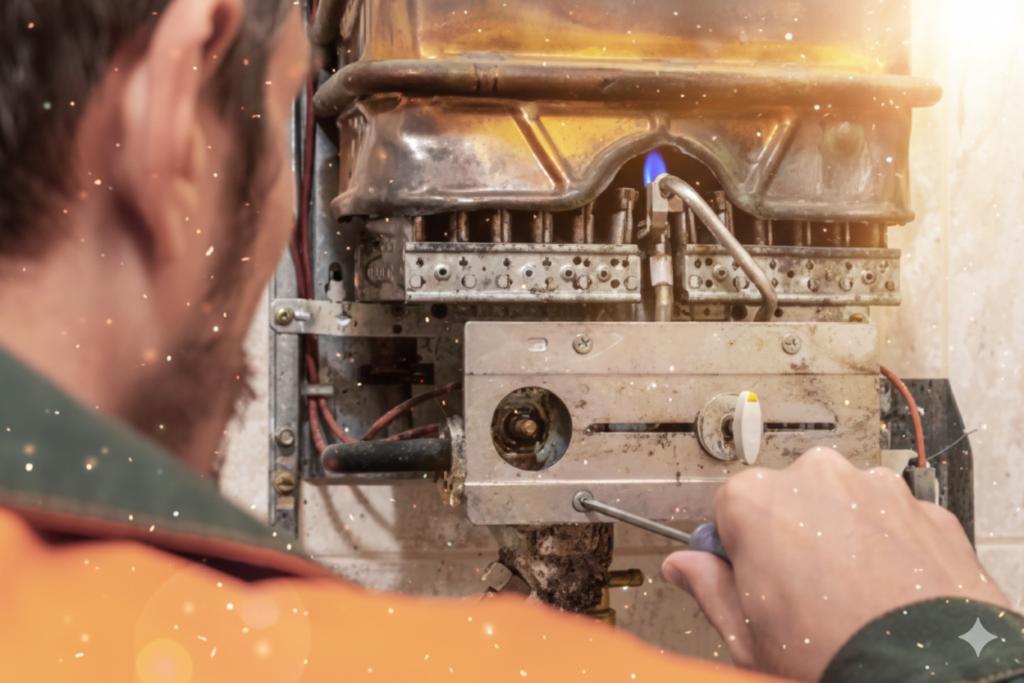
Carbon monoxide kills around 30-50 people in the UK every year and sends over 4,000 to hospital. You cannot see it, smell it, or taste it. The only defences are knowledge, working alarms, and properly maintained appliances. This guide explains what every homeowner and tenant needs to know.
If You Suspect Carbon Monoxide NOW
- Stop: Turn off all gas appliances if safe to do so
- Ventilate: Open all doors and windows immediately
- Get out: Leave the property – take everyone including pets
- Call for help: From outside, call 0800 111 999 (Gas Emergency)
- Get medical help: If anyone feels unwell, call 999 or go to A&E – tell them you suspect CO poisoning
Do not re-enter until a Gas Safe engineer has declared it safe.
Key Facts
- CO is colourless, odourless, and tasteless – you cannot detect it without an alarm
- Symptoms mimic flu: headache, dizziness, nausea, confusion
- Every home with a gas appliance needs a CO alarm
- Annual boiler servicing is the best prevention
- Landlords must fit CO alarms in rooms with fixed fuel-burning appliances (law since 2022)
In This Guide
What is Carbon Monoxide?
Carbon monoxide (CO) is a poisonous gas produced when fuels do not burn completely. It is called the “silent killer” because:
- You cannot see it (colourless)
- You cannot smell it (odourless)
- You cannot taste it (tasteless)
- It can kill in minutes at high concentrations
- It can cause serious harm over time at low concentrations
How CO affects the body
When you breathe in carbon monoxide, it enters your bloodstream and binds to haemoglobin (the part of red blood cells that carries oxygen). CO binds to haemoglobin over 200 times more strongly than oxygen does.
This means your blood can no longer carry oxygen to your organs and tissues. Your brain, heart, and other vital organs begin to suffocate. At high concentrations, this can cause collapse and death within minutes. At lower concentrations, it causes gradual poisoning that may go unnoticed for hours or days.
How Boilers Produce Carbon Monoxide
When gas burns properly with enough oxygen, it produces carbon dioxide (CO2) and water vapour – both harmless. This is called complete combustion. The flame is blue and crisp.
When gas burns without enough oxygen, it produces carbon monoxide (CO). This is called incomplete combustion. The flame may be yellow or orange instead of blue.
Common causes of CO production
| Cause | What Happens | Warning Signs |
|---|---|---|
| Blocked flue | Exhaust gases cannot escape and may re-enter the home | Birds nesting, debris, ivy growing over terminal |
| Faulty flue | Gaps or damage allow CO to leak into living space | Visible damage, staining around flue |
| Blocked ventilation | Boiler starved of air for combustion | Vents covered or blocked |
| Poor installation | Incorrect setup leads to unsafe combustion | Problems from day one |
| Lack of servicing | Components degrade, combustion becomes inefficient | No service for 12+ months |
| Worn components | Burner, heat exchanger, or seals fail | Age, strange noises, poor performance |
Other fuel-burning appliances can also produce CO: gas fires, gas cookers, oil boilers, wood burners, and solid fuel appliances.
Symptoms of Carbon Monoxide Poisoning
CO poisoning symptoms are often mistaken for flu, food poisoning, or tiredness. This is one of the reasons it is so dangerous – people do not realise what is happening.
Early symptoms (low-level exposure)
- Headache (often described as a dull, persistent headache)
- Dizziness or light-headedness
- Nausea or stomach pain
- Tiredness and confusion
- Shortness of breath
- Difficulty concentrating
Severe symptoms (high-level exposure)
- Impaired vision
- Loss of coordination
- Vomiting
- Chest pain
- Seizures
- Loss of consciousness
- Death
Key clues that suggest CO rather than illness
- Symptoms improve when you leave the house and return when you come back
- Multiple people in the household (including pets) feel unwell at the same time
- Symptoms started after using a gas appliance or turning on the heating
- Pets are affected – animals are often affected before humans due to their smaller size and faster breathing
If you notice these patterns, treat it as a potential CO emergency.
Warning Signs in Your Home
While CO itself is invisible, there are physical signs that may indicate a problem with your appliances or ventilation:
Signs on or around the boiler
- Yellow or orange flames instead of crisp blue (on older boilers where the flame is visible)
- Soot or black/brown staining around the appliance
- Pilot light frequently blowing out
- Increased condensation on windows in the room
Signs around the flue
- Staining or discolouration around the flue pipe
- Visible damage to the flue
- Birds nesting near or in the flue terminal
- Vegetation (ivy, plants) growing over the external flue terminal
General signs
- A stale or stuffy atmosphere in the room
- The room feels warmer than usual when the boiler is running
If you notice any of these signs, stop using the appliance and call a Gas Safe engineer immediately.
Who is Most at Risk?
Anyone can be affected by carbon monoxide, but some groups are more vulnerable:
| Group | Why Higher Risk |
|---|---|
| Babies and young children | Breathe faster, smaller body mass |
| Elderly people | May dismiss symptoms as age-related, less able to evacuate |
| Pregnant women | CO can harm the unborn baby |
| People with heart or breathing conditions | Already compromised oxygen delivery |
| People who are asleep | Cannot notice symptoms developing |
| People who have been drinking alcohol | Symptoms masked or dismissed |
Pets (especially birds and small animals) are often affected first because of their size and metabolic rate. If your pets seem unwell at the same time as family members, consider CO as a possible cause.
CO Alarms: What You Need to Know
A carbon monoxide alarm is the only way to detect CO in your home. It should be considered essential safety equipment, not optional.
What to buy
- Look for alarms marked EN 50291 (the European standard for CO detectors)
- Look for the BSI Kitemark for additional assurance
- Choose an audible alarm (not just a colour-changing card or spot detector)
- Battery-powered alarms are fine; sealed lithium battery units last 7-10 years
- Some alarms have digital displays showing CO levels
Where to install
- In every room with a gas appliance (boiler, fire, cooker)
- In bedrooms or hallways outside bedrooms
- At head height on a wall, or on the ceiling
- 1-3 metres from the appliance (check manufacturer instructions)
- Not directly above a cooker or in a bathroom
Maintenance
- Test the alarm monthly using the test button
- Replace batteries when needed (or replace the whole unit for sealed alarms)
- Replace the entire alarm according to manufacturer instructions (usually every 5-10 years)
- Do not paint over the alarm or cover it
What a CO alarm does NOT do
A CO alarm warns you when there is already a problem. It does not prevent CO being produced in the first place. That is why annual servicing is essential – it catches problems before they become dangerous.
Prevention: The Critical Role of Annual Servicing
An annual boiler service by a Gas Safe registered engineer is the single most important thing you can do to prevent carbon monoxide poisoning.
What happens during a service
A proper service is not just “looking at” the boiler. The engineer will:
- Visual inspection: Check for damage, corrosion, leaks, and wear
- Flue gas analysis: Use a calibrated analyser to measure the exact products of combustion – this tells us whether the boiler is burning cleanly and safely
- Flue inspection: Check the flue is intact, properly connected, and unobstructed
- Ventilation check: Ensure the boiler has adequate air supply
- Safety device testing: Verify that safety cut-outs work correctly
- Component cleaning: Clean burner, heat exchanger, and other parts as needed
- Gas pressure check: Confirm gas pressure is within safe parameters
The flue gas analyser
The flue gas analyser is key. It measures CO levels in the exhaust gases. This is the definitive test that tells us whether your boiler is safe or producing dangerous levels of carbon monoxide. A visual inspection alone cannot tell you this.
If the readings are outside safe limits, the engineer must either fix the problem or condemn the appliance (mark it as unsafe and disconnect it).
When to service
- Every 12 months minimum
- Autumn is ideal (before winter demand)
- Required to maintain most manufacturer warranties
For servicing in London, see our boiler servicing page.
Landlord Legal Requirements
If you are a landlord, you have specific legal duties regarding gas safety and carbon monoxide.
Gas Safety (Installation and Use) Regulations 1998
- Annual gas safety check by a Gas Safe registered engineer
- Gas Safety Certificate (CP12) must be provided to tenants within 28 days of the check
- New tenants must receive a copy before they move in
- Records must be kept for 2 years
Smoke and Carbon Monoxide Alarm Regulations 2015 (amended 2022)
Since October 2022, landlords in England must:
- Install a CO alarm in any room with a fixed fuel-burning appliance (this now includes gas boilers, not just solid fuel)
- Ensure alarms are in working order at the start of each new tenancy
- Repair or replace faulty alarms when reported by tenants
Failure to comply can result in fines up to £5,000 per breach.
For full details on landlord requirements, see our landlord gas safety page.
What to Do in a Carbon Monoxide Emergency
If your CO alarm sounds
- Do not ignore it – treat every alarm as real
- Turn off gas appliances if you can do so safely
- Open all windows and doors to ventilate
- Get everyone out of the property (including pets)
- Do not go back inside to collect belongings
- Call the Gas Emergency Line: 0800 111 999 (free, 24 hours)
- If anyone feels unwell: Call 999 or go to A&E immediately – tell them you suspect CO poisoning
If you suspect CO poisoning without an alarm
If multiple people feel unwell with flu-like symptoms, especially if symptoms improve when leaving the house:
- Get everyone out immediately
- Open windows and doors as you leave
- Call the Gas Emergency Line from outside
- Seek medical attention – a blood test can confirm CO exposure (but must be done quickly as CO clears from the blood)
Important medical information
If you go to hospital or call an ambulance, tell them clearly that you suspect carbon monoxide poisoning. CO poisoning requires specific treatment (high-flow oxygen, possibly hyperbaric oxygen therapy in severe cases). Medical staff need to know CO is suspected to test for it and treat appropriately.
After the emergency
Do not use any gas appliances or re-enter the property until a Gas Safe registered engineer has:
- Identified the source of the CO
- Fixed the problem or isolated the appliance
- Confirmed the property is safe
Frequently Asked Questions
Can I smell carbon monoxide?
No. Carbon monoxide is completely odourless. You cannot detect it with any of your senses. The only way to detect CO is with a proper alarm. If you smell gas (rotten eggs smell), that is natural gas (methane) which has an odour added for safety – this is a different danger and you should still evacuate and call 0800 111 999.
Do I need a CO alarm if I have a new boiler?
Yes. While new boilers are generally very safe, any fuel-burning appliance can potentially produce CO if something goes wrong. A CO alarm is cheap insurance. It is also now a legal requirement for landlords in England to install CO alarms in rooms with gas boilers.
My CO alarm went off but I feel fine. Was it a false alarm?
Do not assume it was a false alarm. CO affects people differently, and you may have been exposed to low levels. Follow the emergency procedure: ventilate, evacuate, call the Gas Emergency Line. Let them investigate and confirm it is safe before returning.
How long does carbon monoxide stay in your body?
The half-life of CO in blood is about 4-6 hours when breathing normal air. With high-flow oxygen treatment, this reduces to about 1 hour. However, even after CO clears from blood, there can be delayed neurological effects. Always seek medical attention after suspected exposure.
Can carbon monoxide come through walls from a neighbour’s property?
Yes, this can happen in flats and terraced houses, especially through shared voids, cavities, or poorly sealed areas. This is another reason why CO alarms are important even if you have electric heating – the CO could come from a neighbouring property.
Is a yellow flame on my gas hob dangerous?
A yellow or orange flame on a gas hob can indicate incomplete combustion. While brief yellow tips are sometimes normal when the burner first lights, persistently yellow flames should be checked by an engineer. Gas hobs should generally burn with a blue flame with small yellow tips at most.
How often should I replace my CO alarm?
Most CO alarms have a lifespan of 5-10 years. Check the manufacturer’s instructions. The alarm should have an expiry date printed on it. Replace it before this date, even if it seems to be working.
Can opening windows prevent CO poisoning?
Good ventilation reduces the risk by allowing CO to disperse and ensuring appliances have adequate air for combustion. However, ventilation alone is not a substitute for properly maintained appliances and working CO alarms. If an appliance is producing CO, the solution is to fix the appliance, not just ventilate more.
Concerned About Carbon Monoxide?
If you are worried about your boiler’s safety, or if it is due for a service, do not wait. Our Gas Safe registered engineers can inspect your appliances, test for safe combustion, and give you peace of mind.
Gas Emergency (smell gas or suspect CO): 0800 111 999