







Boiler Pressure Keeps Dropping? A Step-by-Step Guide to Repressurising (And When to Call an Engineer)
October 21, 2025
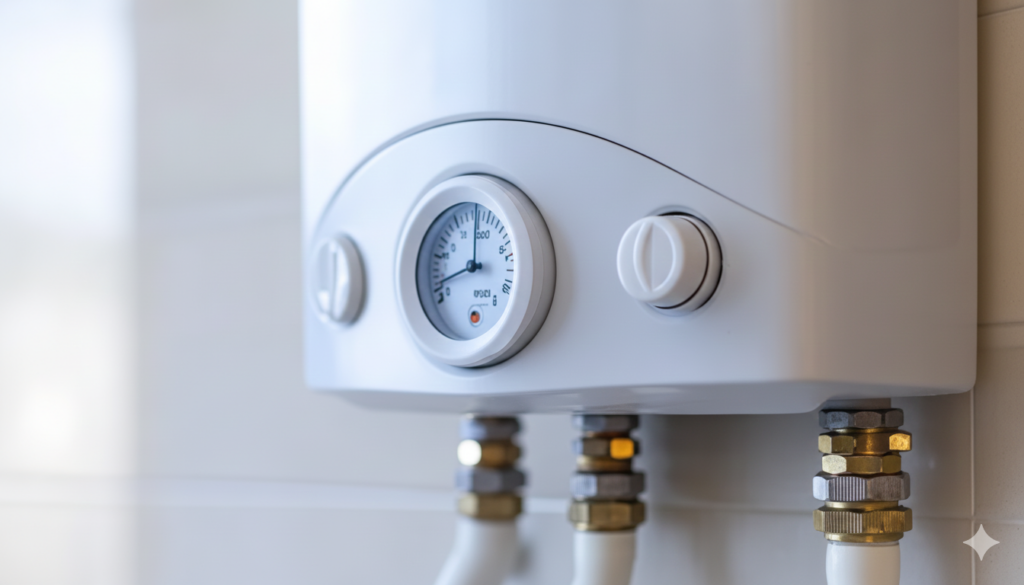
A Gas Safe registered engineer explains what boiler pressure actually means, how to top it up safely, and when low pressure signals something more serious.
Jump to:
If your boiler pressure keeps dropping, you are not alone. It is one of the most common boiler problems we see, and in many cases you can fix it yourself in a few minutes.
But sometimes low pressure is a symptom of something more serious. This guide shows you how to tell the difference, how to top up safely, and when to call for help.
Quick Diagnosis (60 seconds):
- Pressure below 1.0 bar and boiler will not fire: You usually need a top up (repressurise).
- Pressure drops slowly over weeks: Often a small leak at a radiator valve, pipe joint, or inside the boiler.
- Pressure drops to zero in hours or overnight: Likely a bigger leak, or a stuck pressure relief valve discharging.
- Pressure shoots up when heating is on (towards 2.8 to 3.0 bar) then drops when cold: Commonly an expansion vessel problem.
- Pressure drops after bleeding radiators: Normal. You released water. Top up once and monitor.
Key point: low boiler pressure is not a gas safety emergency. Modern boilers lock out to protect themselves.
What Is Boiler Pressure?
Boiler pressure refers to the pressure of the water circulating through your central heating system. It is measured in bars.
Your boiler needs enough pressure to push water around all the radiators and back to the boiler. Too low and the system cannot circulate properly. Too high and safety devices will activate to protect the boiler.
This is different from gas pressure or mains water pressure. Boiler pressure is a closed loop: the same water goes round and round your heating system.
What pressure does and does not mean:
- Low pressure usually means you are low on system water (often due to a leak or a recent bleed).
- High pressure often points to an expansion vessel issue or a filling loop left open.
- Pressure problems are not the same as gas supply faults. A boiler can have perfect gas supply and still lock out on low pressure.
How to Check Your Pressure
Every boiler has a pressure gauge. It is either:
- Analogue dial: a round gauge with a needle, usually on the front of the boiler
- Digital display: shown on the boiler screen, often with a bar symbol
Some older boilers have the gauge on the pipework below the boiler rather than on the unit itself.
Reading the Gauge
The gauge shows pressure in bars. Many have a green zone (normal) and red zones (too low or too high).
- Below 1.0 bar: too low. Boiler may lock out.
- 1.0 to 1.5 bar: normal when cold.
- 1.5 to 2.0 bar: normal when heating is running.
- Above 2.5 bar: too high. Pressure relief valve may discharge.
What Pressure Should It Be?
For most combi and system boilers:
| State | Normal Pressure |
|---|---|
| Heating off (cold) | 1.0 to 1.5 bar |
| Heating running (warm) | 1.5 to 2.0 bar |
Pressure rises slightly when the heating is on because water expands as it heats. This is normal. It should drop back when the system cools.
Rule of thumb: if your boiler sits around 1.2 to 1.5 bar when cold and does not fall below 1.0 bar over time, your system is behaving normally.
How to Repressurise Your Boiler (Step by Step)
If your pressure is below 1.0 bar, you can usually top it up yourself. This is called repressurising.
⚠️ Before You Start
- Turn the heating off and let the system cool for at least 30 minutes
- Do not add water to a hot system
- Keep an eye on the gauge the entire time
- Stop at 1.5 bar (cold). Overfilling is a common mistake
What Is a Filling Loop?
The filling loop connects your boiler to the mains water supply. It allows you to add water to the heating system.
There are two common types:
- External filling loop: a braided silver hose with valves at each end, usually located below the boiler
- Built-in filling loop: integrated into the boiler, operated by a key or lever (common on newer models)
Common mistake: leaving the filling loop valves slightly open after topping up. This can cause pressure to creep up and trigger the pressure relief valve later.
Step by Step: External Filling Loop
- Locate the filling loop. It is usually under the boiler, a flexible braided hose connecting two pipes.
- Check both valves are closed. Handles should be perpendicular to the pipe (across, not along).
- Open the first valve slowly. Turn the handle so it aligns with the pipe.
- Open the second valve slowly. Water will flow into the system. Watch the pressure gauge.
- Stop at 1.5 bar. Close the second valve first, then the first.
- Check for drips around the valves and hose connections.
Step by Step: Built-In Filling Loop
- Locate the filling key or lever. Check your boiler manual for the exact position.
- Insert the key or move the lever to open. You may hear water flow.
- Watch the pressure. Stop at 1.5 bar.
- Close fully and remove the key if applicable. Do not leave the key in place.
After Repressurising
Turn your heating back on and check:
- The boiler fires and runs normally
- Radiators heat up
- Pressure rises slightly when hot, then settles again when cold
- No visible leaks around the boiler, valves, or radiators
If pressure drops again within days: you likely have a leak or a discharge issue. Topping up repeatedly is not a fix. Use the checks below.
Why Does Pressure Keep Dropping?
If you are topping up regularly, something is causing water to leave the system. The cause depends on the pattern.
Pattern A: Slow drop over weeks
Most commonly a small leak at a radiator valve, a pipe joint, or a minor weep inside the boiler. These can be hard to spot because water can evaporate before it pools.
Pattern B: Drops to zero quickly
Usually a more significant leak, or the pressure relief valve discharging water outside.
Pattern C: Pressure rises too high when heating is on then drops when cold
Often an expansion vessel problem, or a filling loop left open.
1. Small Leak Somewhere in the System
Common leak points:
- Radiator valves (TRVs and lockshields)
- Towel rail joints
- Pipe joints under sinks or behind boxing
- Boiler internal components (pump seals, diverter valve, heat exchanger seals)
2. Pressure Relief Valve Discharging
If pressure gets too high, the pressure relief valve (PRV) releases water to protect the boiler. This discharges through a small copper pipe outside your property (often near an external wall, sometimes below a balcony).
Check outside:
- Wet patch, staining, or green marks below the copper discharge pipe
- Drips during heating operation
If the PRV has opened repeatedly, it may not seal properly afterwards, which can then cause gradual pressure loss.
3. Faulty Expansion Vessel
The expansion vessel absorbs the pressure increase when water heats up. If it fails or loses charge, pressure swings are common.
Typical signs:
- Pressure climbs rapidly when heating turns on
- Pressure approaches 3 bar
- PRV discharges outside
- Pressure then drops lower than before when system cools
This needs an engineer. Do not attempt to access or repressurise internal components yourself.
4. Recently Bled Radiators
Bleeding radiators releases air and a small amount of water. A small pressure drop after bleeding is normal. Top up once to 1.5 bar and monitor.
5. Auto Air Vent Weeping
Some systems have automatic air vents. If these stick open, they can release water slowly and cause gradual pressure loss.
Leak Checks You Can Do in 5 Minutes
You do not need to dismantle anything. These checks catch a large percentage of the obvious issues:
1) Check every radiator valve
- Run tissue around TRV head area and lockshield valve
- Look for green crusting, rust marks, or damp carpet
- Pay attention to towel rails (common leak point)
2) Check the boiler area
- Look underneath for moisture or staining
- Check visible pipe joints and isolation valves
- If the boiler is in a cupboard, check the base for water marks
3) Check the PRV discharge outside
- Find the small copper pipe that terminates outside
- Look for recent wet patches or staining beneath it
- If it drips when the heating is on, tell your engineer (this is useful evidence)
4) Check your filling loop valves are fully closed
- Both valves should be fully closed after topping up
- A slightly open valve can cause pressure creep and later discharge
Pro tip: take a photo of the pressure gauge when cold (morning) and when hot (evening). The pattern helps diagnosis and saves time on the visit.
When to Call an Engineer
Topping up occasionally is normal. Topping up repeatedly is not.
Call an Engineer If:
- You are topping up more than once a month. There is a leak or discharge that needs finding.
- The pressure drops to zero quickly. This indicates a significant leak or PRV discharge.
- Pressure rises too high when heating is on (towards 2.5 bar and above). Expansion vessel or filling loop issue.
- You see any water leaking from the boiler, pipes, or radiators.
- The boiler shows a pressure related fault code (see Manufacturer Help Hubs for model guidance).
- You topped up but the boiler still will not fire. There may be another fault.
⚠️ Do Not Keep Topping Up Indefinitely
Constantly adding fresh water introduces oxygen and minerals into the system. This accelerates corrosion, sludge build-up, and long-term damage. If you are topping up weekly, stop and get the cause fixed.
Pressure Problems You Cannot Solve?
We find leaks, fix expansion vessels, and resolve pressure faults properly. No guesswork, just diagnosis.
📞 Call 0203 695 3137 Request a Call BackRelated Problems
Pressure issues often appear alongside other symptoms:
- Cold radiators or cold spots: may indicate sludge or circulation problems. See our Power Flushing Guide.
- Boiler noises: kettling, banging, or gurgling can relate to pressure, sludge, or trapped air. See our Boiler Noises Guide.
- Boiler will not fire: low pressure is one cause, but not the only one. Always check fault codes first.
Common Questions
Is low boiler pressure dangerous?
No. Low pressure will cause the boiler to lock out and stop working, but it will not cause a gas leak, explosion, or carbon monoxide risk. It is a nuisance, not a danger.
Can I use the boiler with low pressure?
Most boilers will not fire if pressure is too low. They lock out as a safety measure. You need to repressurise before the boiler will work.
Why does my pressure drop overnight?
Pressure drops slightly as the system cools. A small drop is normal. A drop to near zero overnight usually indicates a leak or discharge.
How often should I need to top up?
A healthy system should hold pressure for months. If you are topping up more than once or twice a year, investigate for leaks.
I topped up but the boiler still shows low pressure. Why?
Possible causes include a faulty gauge, a significant leak losing water as fast as you add it, or the filling loop not fully opened. If in doubt, call an engineer.
Can high pressure damage my boiler?
Sustained high pressure can damage seals and components. The pressure relief valve should protect the boiler, but if it is releasing regularly the underlying cause needs fixing.
My boiler has no filling loop. How do I top up?
Some older systems use a feed and expansion tank in the loft instead of a filling loop. These top up automatically. If pressure is still low, the tank, ball valve, or pipework may be faulty. Call an engineer.
Related Guides
Join 1,000’s of happy customers in London!
Trusted, reliable boilers repair & install specialists.
Get pricing and book repair