







Boiler Not Firing: An Engineer’s Guide to Why Your Boiler Wont Ignite & What to Do…
December 29, 2025
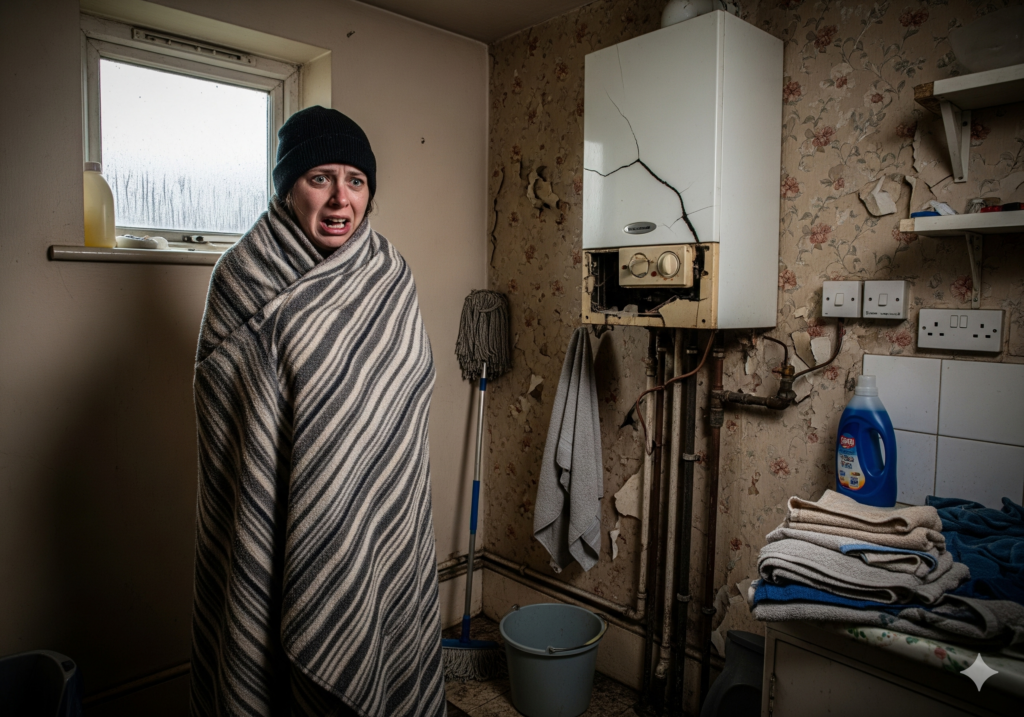
A Gas Safe registered engineer explains the most common reasons your boiler will not fire, what you can safely check yourself, and when you need professional help.
Jump to:
You turn on the heating or run a hot tap and the boiler does nothing. Maybe it clicks. Maybe the fan whirs. Maybe you get a fault code. But it will not ignite.
When a boiler will not fire, it is normally one of three things:
- No power or no “call for heat” (controls, timer, thermostat)
- Safety lockout (pressure, condensate, overheating, airflow checks failing)
- Ignition sequence fails (gas supply, ignition components, fan/air pressure, flame sensing)
This guide walks you through the safe checks you can do in minutes, then explains the most common causes and what usually needs an engineer.
⚠️ Safety First
- If you smell gas: do not touch anything. Do not use switches. Open windows, leave the property, and call the National Gas Emergency Line on 0800 111 999.
- Do not remove the boiler casing. Only a Gas Safe registered engineer should open the appliance.
- The checks below are external and safe for homeowners to perform.
Quick Checks (Do These First)
These solve a large percentage of “boiler not firing” callouts. Work through them in order. It is faster than guessing.
Pro tip: before you touch anything, take a photo of the boiler display (including any code). If it changes, you have evidence of the original fault.
1) Is the boiler powered and the display on?
Check the boiler switch (if present), the fused spur by the boiler, and your consumer unit for a tripped breaker.
- Display totally dead: power supply is the first suspect (spur fuse, breaker, wiring).
- Display on but nothing happens: move to the next checks.
2) Is it actually being asked to turn on?
Boilers do not fire unless a control is calling for heat (central heating) or you open a hot tap (combi hot water).
For central heating
- Turn the room thermostat up above the current room temperature.
- Confirm the programmer is set to “on” (not “off” or “holiday”).
- If your thermostat is wireless, check the batteries and that the receiver has not lost connection.
For hot water
- Combi boiler: open a hot tap fully for 30 seconds. Listen for the boiler attempting to start.
- System/regular boiler: confirm the hot water is scheduled “on” (and any cylinder thermostat is turned up).
If the boiler fires when you force demand (thermostat up or hot tap open), your issue is often settings, batteries, a timer fault, or a control/zone valve issue, not the boiler core.
3) Is there a fault code or warning light?
If a code is present, write it down exactly. Some brands use letters and numbers (F28, E133, EA). Others use flashing light sequences.
Use our brand pages if you want the exact meaning: Manufacturer Help Hubs.
4) Check system pressure
Low pressure is one of the most common reasons boilers lock out and refuse to fire.
- Below 1.0 bar: too low. Boiler may not fire.
- 1.0 to 1.5 bar (cold): normal range for many systems.
- Above 2.5 bar: too high. Can also trigger safety lockout.
If pressure is low, follow our step-by-step guide: Boiler Pressure Guide.
5) Check gas supply
Make sure the gas isolation valve by the boiler is open (handle in line with the pipe). If it is across the pipe, it is shut.
- If you have a prepayment meter, confirm there is credit.
- Check another gas appliance (hob). If nothing works, it is a supply issue, not the boiler.
6) Cold weather? Check for a frozen condensate pipe
Condensing boilers produce condensate that drains away through a plastic pipe. In freezing weather the external section can freeze, blocking the pipe and forcing a lockout.
- Freezing or near-freezing weather
- Boiler was working then suddenly locked out
- Gurgling before lockout
- Drainage/condensate-related code on some brands
Use our safe thaw method here: Frozen Condensate Pipe Guide.
7) Try ONE reset only
Resetting clears a lockout and allows one fresh ignition attempt. If it fails again, the fault is real. Do not keep hammering reset.
Common Causes and What They Mean
If the quick checks did not fix it, these are the most common underlying causes we see across London. This is written to help you understand what is happening, not to encourage DIY repairs.
Cause 1: Low system pressure (lockout)
What it looks like: pressure below 1.0 bar, boiler refuses to start, sometimes a low-pressure code (for example Ideal F1 or Baxi E119).
Why it stops ignition: a boiler cannot safely run without enough water in the system (risk of overheating and pump damage).
What you can do: top up using the filling loop and bring it back into range. Follow: Pressure Guide.
If it keeps dropping: you likely have a leak, a failed expansion vessel, or a pressure relief valve issue. Repeated top-ups are not a fix.
Cause 2: Frozen condensate pipe (winter lockout)
What it looks like: failure during cold snaps, boiler shows lockout, sometimes gurgling and no ignition.
Why it stops ignition: the boiler cannot safely manage condensate flow, so it shuts down.
What you can do: thaw with warm (not boiling) water, hot water bottle, or warm towel, then reset once. Full steps: Frozen Condensate Guide.
Permanent fix: insulate or reroute the external run to reduce freezing risk.
Cause 3: No gas reaching the burner
What it looks like: boiler goes through startup, you may hear clicking, but no ignition “whoosh”. Often shows ignition failure code.
Common reasons:
- Gas isolation valve partly closed
- Meter supply issue (especially prepay or regulator faults)
- Low inlet gas pressure (supply-side problem)
- Internal gas valve fault (boiler component)
What you can do: confirm the external gas supply is on and other appliances work. If they do not, contact your gas supplier.
What needs an engineer: any internal gas valve or combustion-side diagnosis.
Cause 4: Ignition electrode or ignition lead fault
What it looks like: repeated clicking attempts, no ignition, or intermittent ignition (works sometimes).
Why it stops ignition: if the spark is weak or inconsistent, the burner does not light reliably.
Engineer fix: inspection, cleaning, gap setting, replacement of electrode/lead if needed.
Cause 5: Flame sensing failure (lights then immediately goes out)
What it looks like: boiler fires briefly then shuts down, often showing flame-loss codes.
Why it happens: the flame sensor cannot “prove” the flame, so the boiler shuts off gas for safety.
Engineer fix: clean/replace flame sensor, check burner condition and combustion performance.
Cause 6: Fan, flue, or air pressure proving fault
What it looks like: fan starts then stops, or boiler refuses to continue ignition sequence. Often a fan/air pressure switch code.
Why it stops ignition: modern boilers must prove safe airflow before ignition.
Engineer fix: fan checks, flue integrity checks, pressure switch/air proving diagnostics.
Cause 7: Overheat protection (safety shutdown)
What it looks like: overheat or high-limit code, boiler stops firing.
Common reasons: circulation issues (pump, blocked heat exchanger, sludge), incorrect system pressure, or sensor faults.
Engineer fix: identify why it overheated, not just reset it. Repeated overheating is a serious warning sign.
Cause 8: PCB or wiring fault (the boiler brain)
What it looks like: random codes, boiler not responding correctly, intermittent ignition, or dead controls.
Engineer fix: electrical testing, harness checks, and only then PCB decisions. PCBs can be costly, so diagnosis must be precise.
Common fault codes by brand (ignition and lockout)
Codes vary by model. This table covers the most common ignition-related codes we see, but always check your specific model in the brand hub.
| Brand | Common ignition or “won’t fire” codes |
|---|---|
| Worcester Bosch | EA (no flame / ignition), E9 (safety shutoff), CE (flame lost) |
| Vaillant | F28 (ignition failure), F29 (flame lost), F27 (false flame) |
| Glow-worm | F28, F29 (similar fault structure) |
| Baxi | E133 (ignition failure), E119 (low pressure), fan/airflow codes vary by model |
| Ideal | F1 (low pressure), L2 (ignition lockout), F2 (flame loss) |
Find your exact code meaning here: Manufacturer Help Hubs.
Tip: if the display alternates between two codes, write down both. Some boilers show a “cause” and an “effect” code in rotation.
How to Reset Your Boiler (Safely)
Resetting clears a safety lockout and allows a fresh start sequence. It does not fix the root cause. Use it as a test, not a cure.
Safe reset method
- Check for danger first. No gas smell, no visible leaks, no burning smell.
- Locate the reset function. Usually a reset button or a selector position marked “R”.
- Reset once. Hold for 3 to 5 seconds (some models vary).
- Wait through the start sequence. You may hear fan start, then ignition attempt.
- If it locks out again: stop. The fault is persistent.
⚠️ Reset rule
One reset is reasonable. Two at most if you have fixed something obvious (topped up pressure or thawed condensate). If it still will not fire, call an engineer.
Is this urgent?
Not every no-ignition situation needs an emergency callout. Use this quick triage.
| Situation | What to do |
|---|---|
| Smell gas | Emergency: leave the property and call 0800 111 999 |
| No heating or hot water and vulnerable person in the home | Urgent: call for same-day help if possible |
| No heating but hot water works | Usually safe to wait, check thermostat/programmer first |
| Frozen condensate suspected | Try safe thaw and one reset |
| Repeated ignition failures after reset | Call an engineer (likely ignition, gas, fan/air proving, or PCB related) |
| Water leaking from the boiler | Call today (can damage electronics and create further faults) |
When to Call a Gas Safe Engineer
If you have done the quick checks and the boiler still will not fire, you will save time and money by booking diagnosis rather than repeating resets.
You can usually fix these yourself
- Low pressure (top up once correctly)
- Frozen condensate pipe (safe thaw)
- Thermostat settings or dead batteries
- Tripped fuse or switched off power
- Prepayment meter out of credit
Call an engineer if any of the following apply
- It locks out again after reset (especially ignition failure codes)
- You hear repeated ignition attempts with no ignition
- It lights then immediately goes out (flame detection issues)
- Fan/airflow faults are indicated
- Overheat protection appears
- Water is leaking from the boiler
- You are not confident doing the checks safely
Boiler Not Firing? We Can Help
We diagnose ignition faults and get your heating running again. Fast response across London.
📞 Call 0203 695 3137 Book an EngineerRelated problems
Ignition issues often show up alongside other symptoms. These guides help you narrow it down:
- Boiler pressure dropping: Pressure Dropping Guide
- Frozen condensate: Frozen Condensate Pipe Guide
- Boiler noises: Boiler Noises Guide
- Cold radiators / circulation issues: Power Flushing Guide
Common questions
My boiler clicks but does not ignite. What does that mean?
The clicking is usually the ignition spark attempting to light the burner. If you hear clicks but no ignition, gas may not be reaching the burner, the spark may be weak, or the ignition sequence is failing due to airflow or safety checks. If it persists after you have confirmed gas supply and done one reset, it usually needs an engineer.
Why does my boiler keep losing ignition?
Repeated ignition failures typically point to a component or supply issue: ignition electrode, flame sensor, gas valve, fan/air proving, or control faults. If it only happens during freezing weather, condensate blockage is a common cause.
Is it safe to keep resetting the boiler?
One reset is fine. Two at most if you have fixed something obvious (pressure or condensate). If it locks out again, stop. Repeated resets can worsen faults and can be unsafe on certain failures.
Can low gas pressure stop my boiler firing?
Yes. If inlet pressure is too low, ignition can fail or the boiler may shut down shortly after lighting. If other gas appliances are also weak or not working, the issue may be supply-side and you should contact your supplier.
Why does my boiler only fail to fire in cold weather?
The most common reason is a frozen condensate pipe. If the problem appears only when temperatures drop, deal with condensate first and consider insulation or rerouting to prevent repeat lockouts.
How long does diagnosis usually take?
Many ignition faults can be narrowed down quickly once we can see the boiler, confirm the fault code history, and test ignition, flame sensing, airflow checks, and gas supply. The time varies depending on accessibility and whether parts are needed.
Still No Ignition?
We diagnose boiler faults quickly and explain your options clearly. Fast help across London.
📞 Call 0203 695 3137 Book an EngineerRelated Guides
Join 1,000’s of happy customers in London!
Trusted, reliable boilers repair & install specialists.
Get pricing and book repair